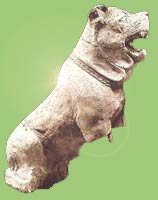
It were probably the Phoenecians who spread this type of dog in the Mediterranean basin, together with other breeds which were the forerunners of other italian breeds like the Cirneco of Etna and of all the Iberian Podenghi.
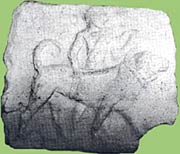
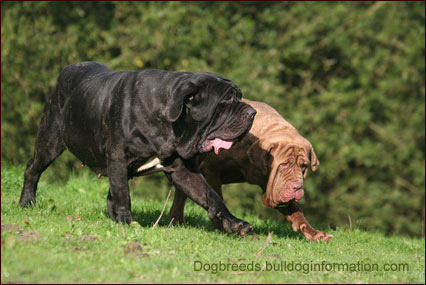
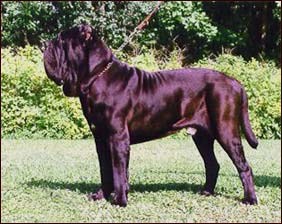
In his "De Re Rustica", Columella defines this dog as an excellent guardian of house and property, anticipating its current use by almost 2000 years. Although the Mastiff was used in Roman times as a weapon of war, and in combat against wild animals in the circus, it was later to be found in the courts of the Renaissance in central and northern Italy as a hunter of large game (deer and wild boar). They were huge, savage dogs, large enough to keep away lions. They could fiercely fight intruders, be they human or animal.
Precisely because of this natural adeptness as a guard dog, the Roman patrician class used the Mastiff to safeguard their villas, which were numerous in the region of Campania at one time. After the fall of the Roman Empire the dogs remained, forming a close link both with the land and the people who lived on the slopes of the Vesuvius.











 Home
Home Dog Breed Finder
 Dog Breeds A to Z
 Bulldog Breeds
 Molosser Breeds
 Terriers
 Hunting Dogs
 Flock Guard Dogs
 Water Dogs
 Hypoallergenic Dogs
 North American Dogs
 British Dog Breeds
 Scandinavian Dogs
 German Dog Breeds
 Turkish Dog Breeds
 Asian Dog Breeds
 Chinese Dog Breeds
 Japanese Dog Breeds
 Russian Dog Breeds
 Finnish Dog Breeds
 Hungarian Dog Breeds
 Swiss Mountain Dogs
 Romanian Dog Breeds
 Laika Breeds
 Sled Dogs
 Guard Dogs
 Hairless Dogs
 Ridgeback Dogs